


Description
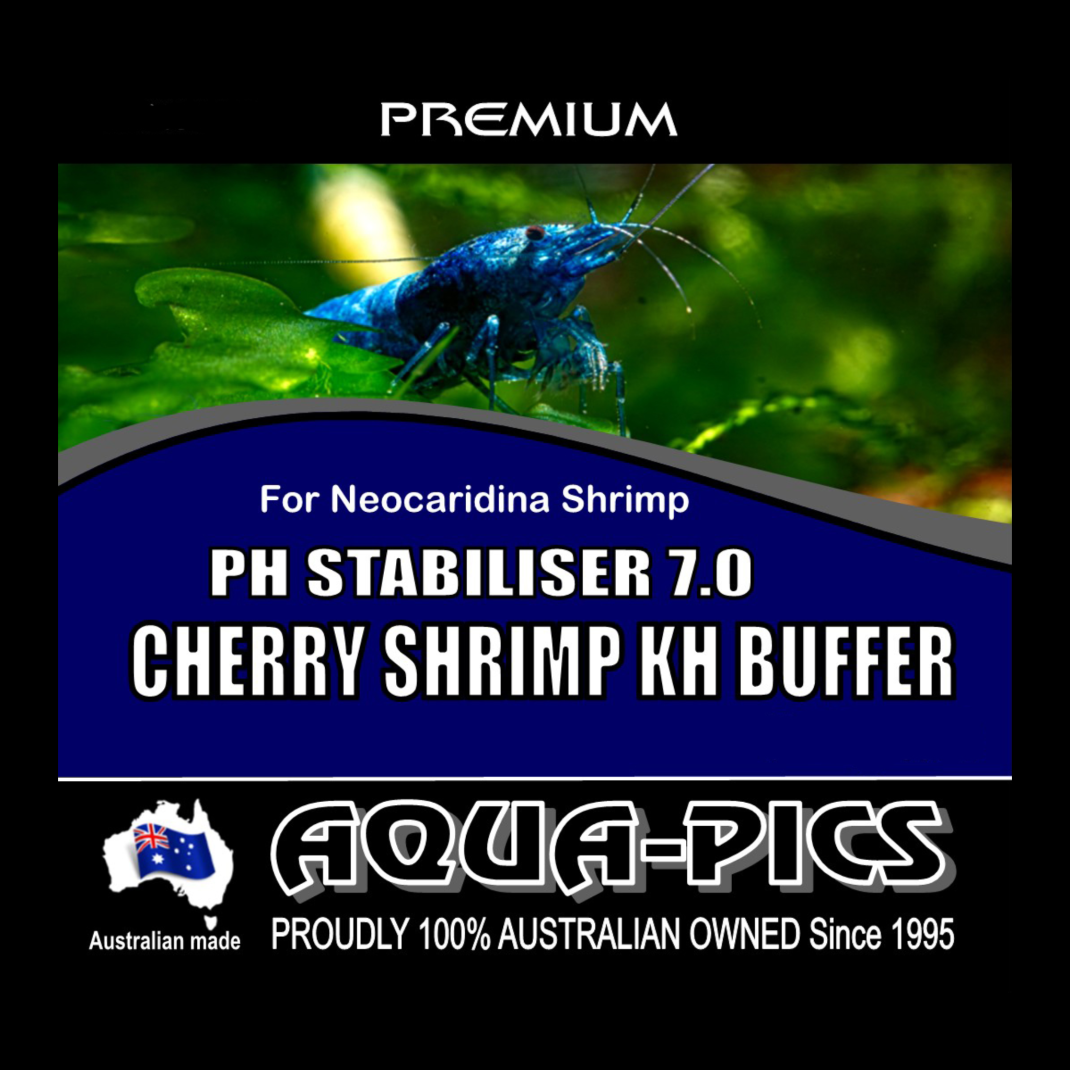
Carbonate Hardness & pH Stabilizer for Cherry & Neocaridina Shrimp
Maintain rock-solid water stability for your Neocaridina colony with Aqua-Pics Cherry Shrimp KH Buffer. Rapid fluctuations in pH are one of the leading causes of stress, breeding failure, and mortality in dwarf shrimp setups. This specialized buffer increases Carbonate Hardness (KH), establishing a reliable buffering capacity (alkalinity) that prevents sudden pH drops and keeps your aquarium water safe and stable.
While GH conditioners provide essential minerals like calcium and magnesium for shell building, KH acts as a crucial safety net for your water chemistry. Designed specifically for Red Cherries, Blue Dreams, Yellows, and other Neocaridina morphs, Aqua-Pics KH Buffer ensures your tap, purified, or RO replacement water meets the optimal buffering range for a thriving, breeding colony.
Key Benefits:
-
Locks in pH Stability: Safely raises KH to buffer against acidic shifts caused by organic waste, active substrates, or CO2 injection.
-
Optimized for Neocaridina: Helps establish the moderate KH levels (Neocaridina davidi) species need to thrive and reproduce comfortably.
-
Works Hand-in-Hand with GH Salts: Use alongside Aqua-Pics Cherry Shrimp GH Conditioning Salts to create completely customized, perfectly balanced water parameters from RO or soft water sources.
-
Clean & Algae-Safe: Contains zero phosphates or nitrates, ensuring pure water quality without promoting unwanted algae growth.
Recommended For:
-
Red Cherry Shrimp (Neocaridina davidi)
-
Neocaridina Color Morphs (Blue Dream, Yellow Rice, Orange Sunburst, Green Jade, Rili, Bloody Mary)
-
Community tanks featuring Neocaridina shrimp and snails requiring stable alkaline buffering
Usage & Dosage Instructions:
-
Pre-Dissolve: Always mix the required buffer thoroughly into replacement water in a bucket or container prior to adding it to the tank.
-
Target Parameters: Dose incrementally to achieve your desired Carbonate Hardness (recommended target for Neocaridina: 2 – 5 dKH).
-
Best Practice: Allow replacement water to thoroughly dissolve and test with a reliable KH test kit or TDS meter before performing your water change.


